
Defending native plants, one pesto at a time.
Not every non-native plant is invasive. Plenty of them play nicely with others and are decent neighbors.
Garlic mustard is not one of those.
Garlic mustard is a real jerk.
It shoots up early in the spring, gobbling up all the nutrients and moisture, and shading out the native plants.
Its roots release chemicals that impede the critical fungi that support the growth of trees and other plants.
It releases an alarming number of seeds, making it a challenge to control.
As this headline from the Nature Conservancy says, it is “Invasive, Destructive, and Edible.”
So when I saw a big patch growing outside the fence at my community garden, I knew what I had to do.
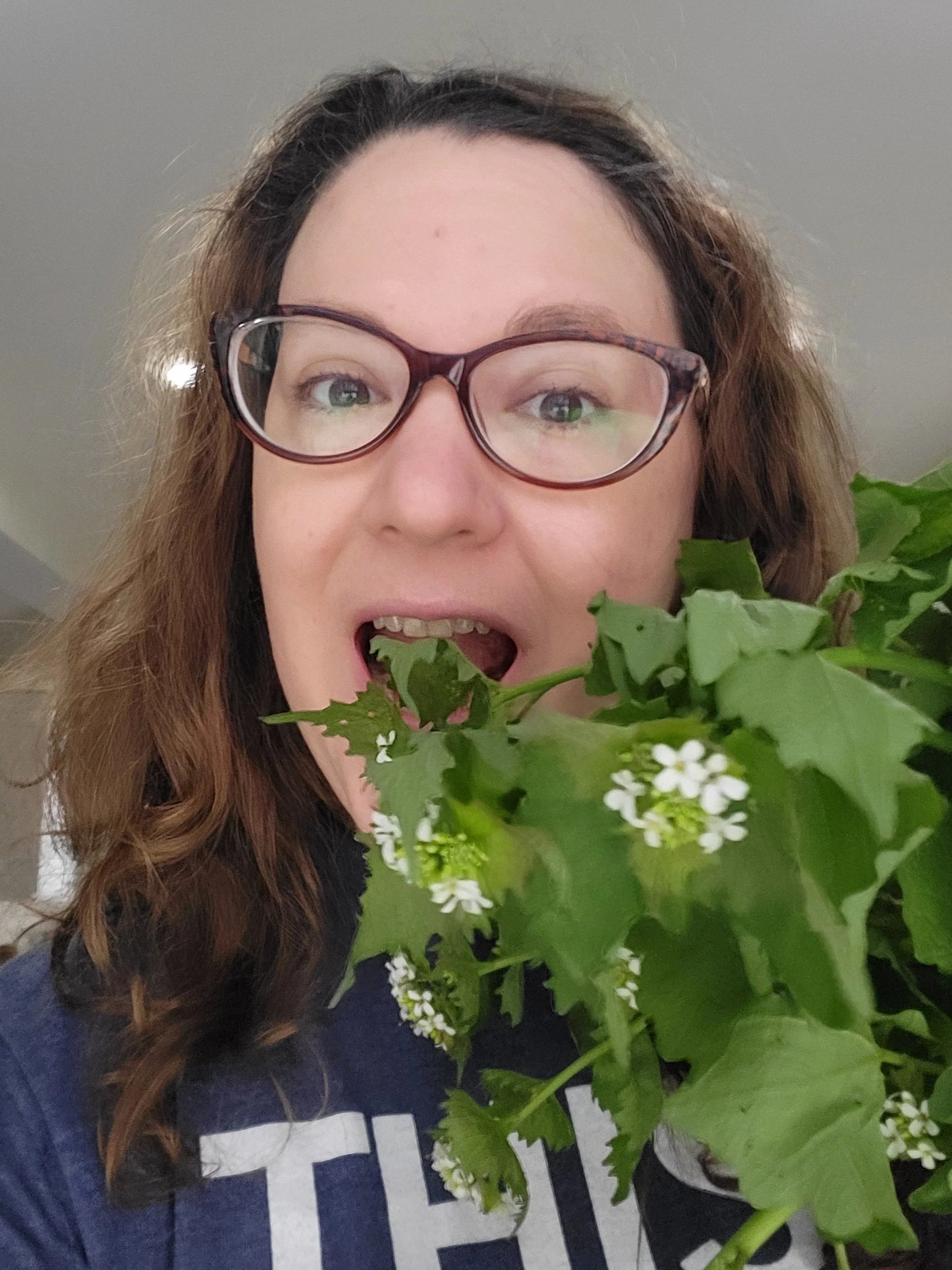
CHOMP
Special Safety Note Re: Eating Plants You Found in the Alley
Foraging is probably safer than you think, if, and only if:
You stick to plants you’re 100% sure of
Seriously, you should not guess
You clean everything you gather
You are aware of the surrounding environment
For me, that looks like this in practice:
I make sure I have two separate confirmations of the plant
In this case, that meant having been taught by a real person what garlic mustard looks like, to the point that I look at it, and say, “Hey, that’s garlic mustard!” automatically. And then double-checking with my plant ID app. (I wouldn’t do this with a plant I was very familiar with, like a black cap raspberry, or a maple tree)
I washed it very thoroughly—first in the sink, and then in the salad spinner. In this case, my biggest concern is pollution from dirt and dogs.
I wouldn’t forage around an abandoned coal plant, say, or next to a farm field that had just been sprayed.
Back to the garlic mustard…
Usually, when foraging, you want to be conservative. Only take a little, make sure the plant can continue to grow and reproduce.
That goes out the window with garlic mustard.
Remember, it threatens biodiversity, takes all the resources away from native plants, and poisons its neighbors. In this case, there is only one thing to do:
YOINK.
Pull it right out of the ground. Try to get the whole root out. Ideally, before it sets any seeds. Now was the perfect time.
I yoinked a bunch up, wrapped the roots in a paper towel, and proudly emerged from the alley, hoping that everyone I encountered recognized me as a folk hero.
I got it home, chopped off its roots, removed the leaves, washed them a lot, and then did not compost any of the plant remains.
But for all its bad behavior, garlic mustard is a nutritious green, which is probably why it was brought here in the first place. It has vitamins! It has fiber! It has omega-3s!
A Pesto from a Pest
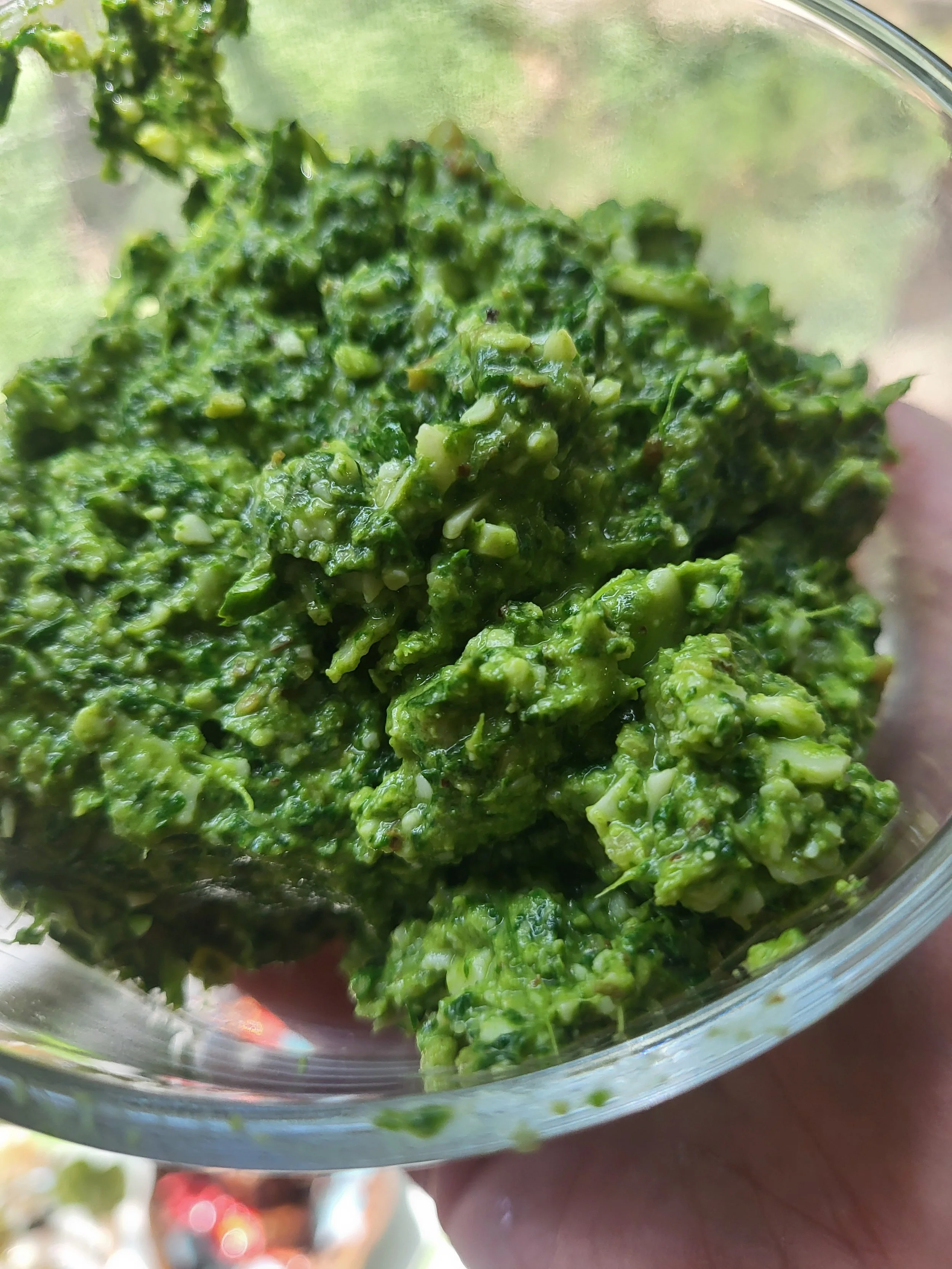
So green! So nutritious!
I actually like the raw flavor of garlic mustard, but I decided to keep things a little less bitter for my pesto. I checked out a few different recipes, looked at what I already had, and came up with this:
Garlic Mustard Parmesan Pesto
1 cup garlic mustard leaves, blanched
1 cup raw spinach
½ cup toasted walnuts
½ cup parmesan reggiano, shredded
A solid glug of olive oil
A splash of lemon juice
About 2 teaspoons of garlic
Grind it all up in the food processor. That’s it.
I put it on pasta with a can of sardines, and it was fantastic. I think it would also be good stirred into cannellini beans, and will probably try that next, perhaps with a crusty bread.